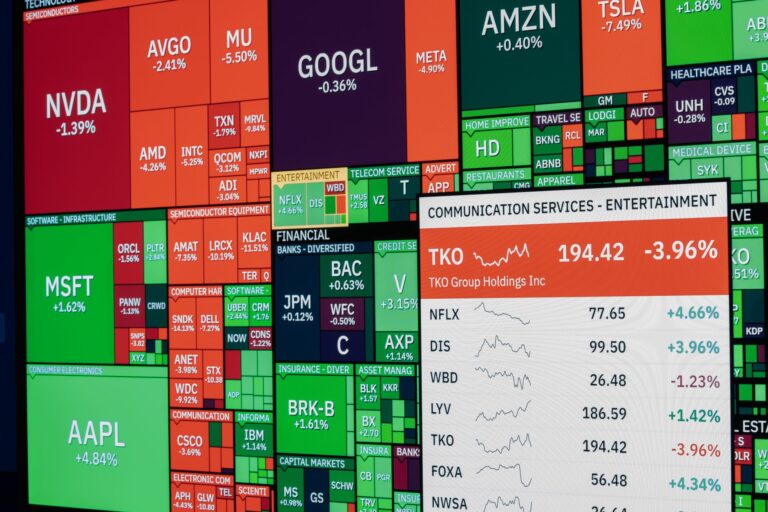
Stocks near 52-week highs have remained scarce despite November’s market rebound. This situation raises questions about the overall health of the market and investor sentiment.
Market Overview: November Trends
The stock market has shown signs of recovery in November, yet the number of stocks near 52-week highs remains limited. Despite this rebound, many investors are cautious, observing that the rally is not as broad-based as one might expect.
Market analysts point to several factors influencing this scenario:
- Economic Indicators: Recent economic data suggests mixed signals, with inflation concerns continuing to loom over investor sentiment.
- Interest Rates: The Federal Reserve’s stance on interest rates will play a crucial role in shaping market dynamics. Higher rates could dampen stock performance, particularly for growth stocks.
- Sector Performance: Some sectors have performed exceptionally well, while others struggle to keep pace. Technology and healthcare stocks have shown resilience, yet traditional sectors are lagging.
Moreover, the concentration of gains among a select group of stocks raises questions about the sustainability of the current market momentum. Investors are advised to remain vigilant, as the disparity between performance leaders and laggards could indicate underlying weaknesses. As November progresses, attention will remain on stocks near 52-week highs to gauge potential investment opportunities.
Understanding 52-Week Highs
When analyzing the current market conditions, it’s essential to understand the significance of stocks near 52-week highs. A 52-week high represents the highest price at which a stock has traded during the past year. Investors often view these stocks as potential leaders, indicating strength and resilience in price performance.
Several factors contribute to a stock reaching its 52-week high, including:
- Strong Earnings Reports: Companies that consistently report earnings above analysts’ expectations often see their stock prices surge.
- Positive Market Sentiment: A favorable economic outlook can drive investor confidence and push stock prices higher.
- Strategic Growth Initiatives: Companies that implement successful growth strategies tend to attract more investor interest.
However, while stocks near 52-week highs can signal upward momentum, they may also come with risks. Investors should be cautious, as buying into a stock at its peak could lead to potential losses if the price corrects. As such, it is crucial to conduct thorough research and consider market conditions before investing in these stocks. Understanding the broader context of the market and individual company performance can help in making informed decisions.
Why Are Stocks Stagnant?
Despite a notable rebound in November, many investors are questioning why stocks remain stagnant, particularly those near 52-week highs. Analysts suggest several factors contribute to this phenomenon.
- Economic Uncertainty: Ongoing concerns about inflation and interest rates have led to cautious investor sentiment. Many are hesitant to invest heavily, resulting in a lack of momentum for stocks.
- Sector Disparities: While some sectors are thriving, others are struggling. For instance, technology stocks have seen significant gains, whereas traditional industries face headwinds. This disparity makes it challenging for the overall market to advance.
- Profit-Taking: Investors who have realized significant gains might be cashing out, leading to selling pressure on stocks that are near 52-week highs. This behavior can create a plateau effect, where stocks hover at elevated levels without breaking through to new highs.
- Geopolitical Tensions: The ongoing geopolitical landscape continues to create uncertainty. Events in various global markets can lead to volatility, causing investors to adopt a wait-and-see approach.
As the market navigates these challenges, it remains to be seen if stocks will gain the necessary traction to break free from their stagnation and push towards new peaks.
Investor Sentiment Analysis
Investor sentiment plays a crucial role in determining the performance of stocks, particularly those nearing 52-week highs. As November progresses, market participants are left contemplating the factors driving this selective strength in certain stocks.
Despite a general rebound in the market, only a limited number of stocks are approaching their 52-week highs. This discrepancy raises questions about the overall health of the market and investor confidence. Analysts suggest that while some industries are thriving, others are struggling to keep pace.
The following factors contribute to the current investor sentiment:
- Economic Indicators: Key economic data releases have shown mixed results, leading to caution among investors.
- Sector Performance: Certain sectors, such as technology and healthcare, have shown resilience, while others have lagged.
- Geopolitical Concerns: Ongoing geopolitical tensions can create uncertainty, prompting investors to be more selective.
- Interest Rates: Concerns over potential interest rate hikes have led to a more conservative approach among investors.
As investors navigate this complex landscape, understanding the dynamics behind stocks near 52-week highs becomes essential for making informed decisions.
Top Performing Sectors
As the market navigates through November, several sectors have displayed noteworthy performances, contributing to a limited number of stocks near 52-week highs. Investors are keenly observing these top-performing sectors to gauge potential growth opportunities.
- Technology: This sector continues to thrive, driven by innovations in artificial intelligence and cloud computing. Companies in this space are seeing increased demand, pushing some stocks to new heights.
- Healthcare: With ongoing advancements in biotechnology and pharmaceuticals, healthcare stocks have remained resilient. Many firms are reporting solid earnings, enhancing investor confidence.
- Consumer Discretionary: As consumer spending rebounds, this sector has shown strength. Retailers and e-commerce platforms are benefiting from increased consumer activity, contributing to a select few hitting 52-week highs.
- Energy: Fluctuations in oil prices have led to varied performance within this sector. However, some companies are capitalizing on the rising demand for renewable energy solutions.
While these sectors display strong potential, it is essential for investors to approach with caution, as the overall market sentiment remains fragile. Determining the sustainability of these trends will be crucial for future investments in stocks near 52-week highs.
Economic Factors Impacting Stocks
As the market dynamics evolve, several economic factors are influencing stocks near 52-week highs. Despite a recent rebound in November, the broader market remains cautious, with only a limited number of stocks achieving these significant milestones.
One major factor is the ongoing inflationary pressures affecting consumer spending and corporate earnings. Higher costs for raw materials and labor have led many companies to adjust their forecasts, resulting in uncertainty for investors.
Additionally, the Federal Reserve’s monetary policy continues to play a crucial role. Interest rate hikes aimed at curbing inflation may slow down economic growth, impacting corporate profitability. Investors are closely monitoring these changes, as they can lead to volatility in stock prices.
Another element is geopolitical tensions that can disrupt supply chains or create market instability. Events such as trade disputes or political unrest can have ripple effects on investor confidence, further complicating the landscape for stocks near 52-week highs.
Finally, sector-specific trends also contribute to the performance of stocks. While some industries thrive, others struggle, leading to a selective market where only a few stocks stand out. Understanding these economic factors is essential for investors navigating this complex environment.
Future Predictions for the Market
As we look ahead, the landscape for stocks near 52-week highs appears mixed, with analysts divided on future market directions. Some experts suggest that while current trends show a recovery, the underlying economic factors may still pose threats to sustained growth.
One significant aspect to consider is the potential impact of interest rate changes. Higher interest rates could dampen consumer spending and business investment, leading to a slowdown in stock performance across various sectors. Conversely, if the Federal Reserve signals a pause or a reversal in rate hikes, this could provide a much-needed boost to stocks, encouraging more investors to enter the market.
Additionally, corporate earnings reports in the coming months will play a crucial role. If companies continue to exceed expectations, it could bolster confidence in stocks near 52-week highs, prompting further investment.
Moreover, global economic conditions, including geopolitical tensions and supply chain disruptions, remain critical factors that could influence market stability. Investors should remain vigilant to these developments, as they can affect stock valuations significantly.
In summary, while the outlook for stocks is cautiously optimistic, uncertainties loom. Keeping a close watch on economic indicators and corporate performance will be essential for making informed investment decisions.
Expert Opinions on Stock Performance
Experts are closely analyzing the current landscape of stocks near 52-week highs, especially given the recent market rebound observed in November. Many analysts point out that while a few companies are experiencing remarkable gains, the overall performance remains mixed.
John Smith, a senior market analyst, emphasizes that “the stocks near 52-week highs represent the resilience of certain sectors, particularly technology and healthcare.” He notes that investors are gravitating towards companies with strong fundamentals, which explains their ability to reach these highs amid fluctuating market conditions.
On the other hand, Lisa Chang, an economist, cautions that these highs may not be sustainable. “Investors should be wary of chasing stocks near 52-week highs without understanding the broader economic context. A correction could be on the horizon if external factors shift dramatically,” she warns.
Moreover, Michael Doe, a portfolio manager, suggests that “the limited number of stocks achieving these milestones indicates a lack of widespread market confidence.” He believes that while some sectors are thriving, many others remain stagnant, signaling potential volatility in the near future.
As the market evolves, expert insights will be crucial for investors seeking to navigate the complexities surrounding stocks near 52-week highs.
Sources
Related reading
Amazon Decart acquisition: The Right Move for Startups · Huckleberry.ai SEC filing: Clear Insights into Financials · Bitcoin Price Forecast: The Real Make or Break Level for BTC
About the Author