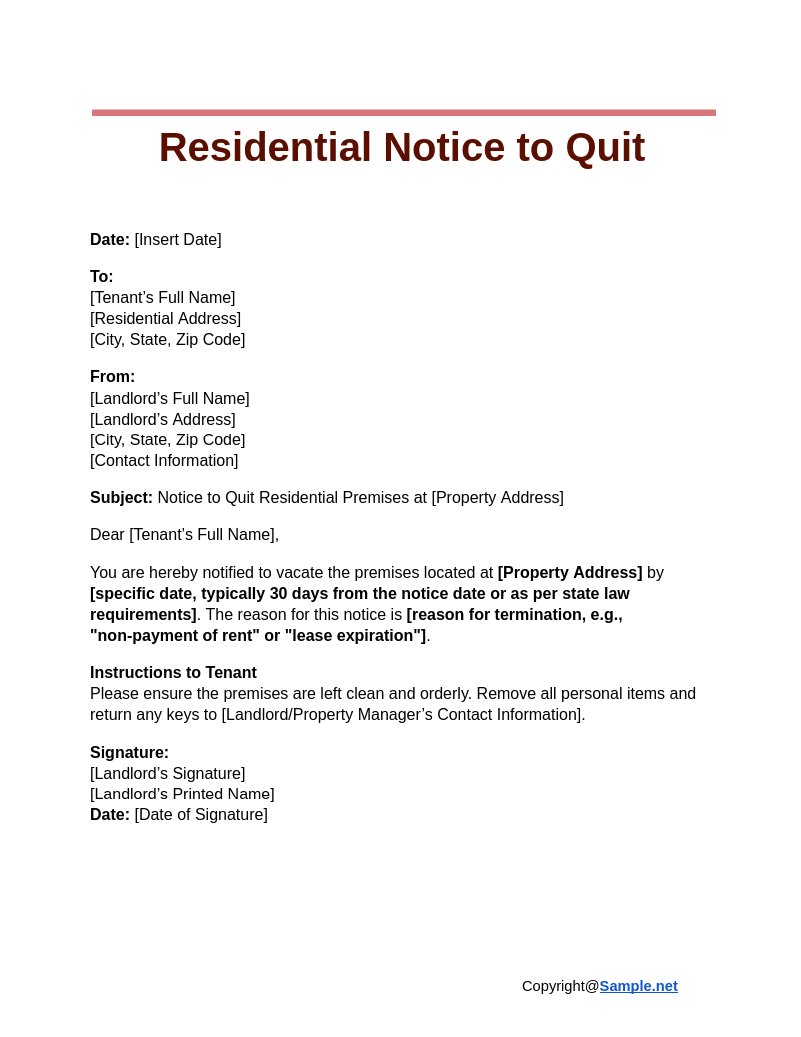
A quit notice from a landlord to a tenant can be a stressful situation. However, understanding your rights and knowing how to handle the situation can make a significant difference. When faced with a quit notice from a landlord to a tenant, it is crucial to stay calm and take action promptly. By familiarizing yourself with the legal implications and seeking advice if needed, you can navigate this challenging situation effectively. Remember, knowledge is power when it comes to dealing with a quit notice from a landlord to a tenant.

Understanding Quit Notice from Landlord to Tenant
Welcome to our guide on the important topic of a quit notice from a landlord to a tenant. Whether you’re a tenant facing this situation or simply want to know more about tenant rights and responsibilities, this article will provide you with detailed insights. Let’s delve into what a quit notice is, why it’s issued, the types of quit notices, and what tenants can do when served with one.
What is a Quit Notice?
A quit notice, also known as an eviction notice, is a formal document issued by a landlord to a tenant to notify them to vacate the rental property. It is a legal requirement that outlines the reasons for the eviction and the timeline within which the tenant must move out. Understanding the terms and implications of a quit notice is crucial for both landlords and tenants.
Reasons for Issuing a Quit Notice
Landlords typically issue a quit notice for various reasons, such as non-payment of rent, lease violations, property damage, or other breaches of the rental agreement. In some cases, landlords may seek to evict tenants to regain possession of the property for personal use or to carry out renovations.
Types of Quit Notices
There are different types of quit notices that landlords can serve to tenants, depending on the reason for eviction:
- Pay or Quit Notice: This type of notice is issued when a tenant fails to pay rent on time. The tenant is given a specific period to either pay the rent or vacate the property.
- Cure or Quit Notice: If a tenant violates the terms of the rental agreement, such as having unauthorized pets or causing disturbances, the landlord may issue a cure or quit notice. This gives the tenant a chance to correct the violation within a certain timeframe.
- Unconditional Quit Notice: In cases of serious violations, such as illegal activities on the property or significant damage, landlords may issue an unconditional quit notice. This type of notice requires the tenant to vacate without any opportunity to remedy the situation.
What to Do When Served with a Quit Notice
Receiving a quit notice can be a stressful and overwhelming experience for tenants. However, it’s essential to understand your rights and options when faced with eviction. Here are some steps to consider:
Review the Notice Carefully
Upon receiving a quit notice, carefully review the document to understand the reason for eviction, the timeline provided for moving out, and any specific instructions or requirements mentioned. Make sure to note important dates and deadlines.
Seek Legal Advice
If you’re unsure about your rights as a tenant or believe that the eviction is unjust, consider seeking legal advice from a tenant rights organization or an attorney specializing in landlord-tenant law. They can provide guidance on how to respond to the quit notice and potentially challenge the eviction in court.
Communicate with Your Landlord
It’s important to maintain open communication with your landlord, even if you disagree with the reasons for the eviction. Try to discuss the situation calmly and see if there’s a possibility to resolve any issues amicably. In some cases, landlords may be willing to negotiate a solution that avoids eviction.
Prepare to Vacate
If it becomes evident that you need to vacate the property, start making arrangements for moving out. Look for alternative housing options, inform utility providers of the impending move, and pack your belongings in an organized manner. Planning ahead can help reduce the stress of relocating.
In conclusion, a quit notice from a landlord to a tenant is a serious matter that requires careful consideration and action. By understanding the reasons for eviction, knowing your rights as a tenant, and taking appropriate steps when served with a quit notice, you can navigate the process more effectively. Remember to seek legal advice if needed and explore available resources for tenant support. Stay informed and proactive to protect your rights as a tenant in any landlord-tenant situation.
Thank you for reading our comprehensive guide on quit notices from landlords to tenants. We hope you found this information helpful and empowering. Remember, knowledge is key to addressing challenging situations effectively. Stay informed, stay empowered, and take steps to protect your rights as a tenant!
Three Rights you Have as a Tenant Facing Eviction #realestate #realtor #facts #tips #learn
Frequently Asked Questions
What should a quit notice from a landlord to a tenant include?
A quit notice from a landlord to a tenant should include the reason for the notice, the date by which the tenant must vacate the premises, and any legal consequences if the tenant does not comply. It is important for the notice to be written clearly and in accordance with local rental laws.
How much notice is typically required in a quit notice from a landlord to a tenant?
The amount of notice required in a quit notice from a landlord to a tenant can vary depending on local laws and the terms of the rental agreement. In many places, landlords are generally required to provide at least 30 days’ notice for the tenant to vacate the property. However, this timeline may be different in certain situations or jurisdictions.
Can a landlord evict a tenant without providing a quit notice?
In most jurisdictions, a landlord is typically required to provide a quit notice to a tenant before proceeding with an eviction. Failing to provide proper notice could result in legal complications for the landlord and may not be legally enforceable. It is important for landlords to adhere to the proper procedures outlined in the law to avoid any issues.
Final Thoughts
In conclusion, receiving a quit notice from a landlord can be a stressful and challenging situation for a tenant. It is essential for tenants to understand their rights and obligations to respond effectively. Seeking legal advice and exploring options for negotiation or relocation can help navigate through this process successfully. Remember, communication and cooperation are key when dealing with a quit notice from a landlord to a tenant.
About the Author