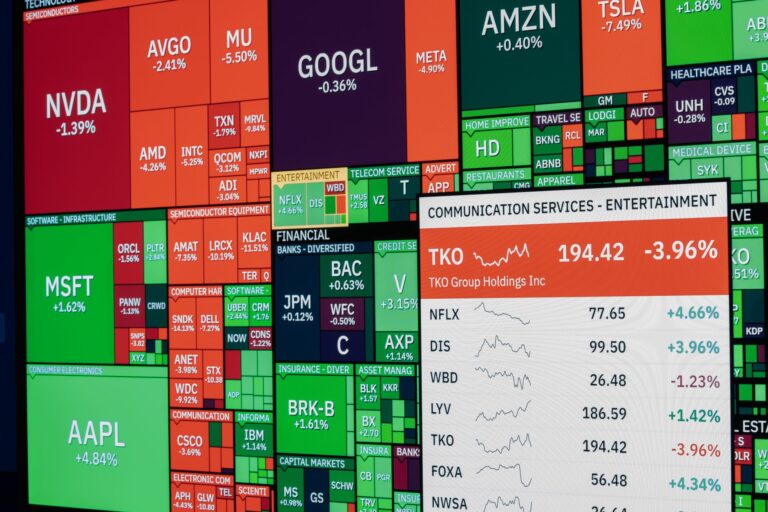
U.S. stocks performance has shown resilience as markets leap forward, even amidst a slide in Nvidia’s shares. Investors are reacting positively to broader economic signals.
Understanding U.S. Stocks Performance
In recent trading sessions, U.S. stocks performance has shown a remarkable rebound, even in the face of declining shares from major companies like Nvidia. Analysts attribute this surge to a combination of factors that have bolstered investor sentiment.
One key element contributing to the positive momentum is the ongoing strength of the labor market. Unemployment rates remain low, which has provided a solid foundation for consumer spending and business investment. Additionally, economic indicators suggest that growth is stabilizing, further encouraging market participants.
Another factor is the Federal Reserve’s cautious approach to interest rate hikes. By signaling a potential pause in monetary policy tightening, the Fed has reassured investors, allowing U.S. stocks performance to gain traction.
Moreover, sectors such as technology and healthcare have shown resilience, with investors diversifying their portfolios to mitigate risks associated with high-profile tech stocks.
As investors digest these developments, many remain optimistic about the broader market outlook. The interplay of economic data, corporate earnings, and geopolitical factors will continue to shape the market landscape. With this environment, U.S. stocks performance is likely to be influenced by both short-term fluctuations and long-term trends.
- Strong labor market
- Cautious Fed policy
- Diverse sector performance
Impact of Nvidia Slide on Markets
The recent decline in Nvidia’s stock has raised concerns among investors regarding its impact on broader market trends. Despite this setback, U.S. stocks performance has demonstrated resilience, showcasing a quick rebound across various sectors.
Market analysts suggest that the Nvidia slide is not a definitive indicator of the tech sector’s overall health. Instead, they emphasize the following factors that have contributed to the positive momentum in U.S. stocks:
- Strong Economic Indicators: Recent reports on employment and consumer spending have exceeded expectations, bolstering investor confidence.
- Diverse Sector Performance: While tech stocks faced pressure, sectors such as healthcare and energy showed significant gains, helping offset losses.
- Investor Sentiment: Many investors remain optimistic about the long-term growth potential of the market, leading to increased buying activity.
- Global Market Trends: International markets have also shown signs of recovery, which has positively influenced U.S. stocks performance.
As a result, the recent fluctuations in Nvidia’s stock may be seen more as a temporary blip than a harbinger of a larger downturn. Investors appear to be focusing on the overall strength of the U.S. economy, driving a rapid recovery in market values.
Key Factors Driving Stock Market Rebound
The recent rebound in U.S. stocks performance can be attributed to several key factors that have contributed to investor optimism. As markets reacted to the Nvidia slide, analysts observed a swift recovery driven by renewed confidence in economic fundamentals.
- Strong Corporate Earnings: Many companies have reported better-than-expected earnings, fueling investor enthusiasm and showing resilience in various sectors.
- Monetary Policy Outlook: The Federal Reserve’s commitment to a cautious approach regarding interest rates has reassured investors, suggesting that borrowing costs will remain manageable for the foreseeable future.
- Sector Rotation: Investors are increasingly rotating their investments into sectors that show growth potential, such as technology and healthcare, which can sustain momentum even amidst volatility.
- Positive Economic Indicators: Recent economic data, including job growth and consumer spending, has exceeded expectations, indicating a robust economic recovery that supports stock valuations.
- Global Market Influences: Developments in international markets, such as potential easing of restrictions in major economies, have also contributed to the positive sentiment, encouraging capital inflows into U.S. markets.
These factors, combined with a resilient consumer sentiment, have played a crucial role in the overall positive shift in U.S. stocks performance, despite the initial turbulence caused by the Nvidia situation.
Investor Sentiment Amidst Market Changes
Investor sentiment has shown remarkable resilience amidst the fluctuations in the market, particularly in response to the recent Nvidia slide. Despite the challenges posed by this decline, U.S. stocks performance has managed to recover quickly, reflecting a complex interplay of investor confidence and market dynamics.
Many analysts believe that the rebound can be attributed to several key factors:
- Strong Economic Indicators: Recent reports highlighting steady job growth and consumer spending have provided reassurance to investors, bolstering confidence in the overall economic landscape.
- Corporate Earnings Reports: Positive earnings surprises from several major companies have reignited interest in equities, leading to a more optimistic outlook for the stock market.
- Low Interest Rates: Continued low interest rates have encouraged investors to seek higher returns in the stock market rather than in fixed-income securities.
As investors process the implications of Nvidia’s slide, many are focusing on the broader market trends rather than individual stock performance. This shift in perspective has contributed to a more stable environment, fostering an atmosphere where U.S. stocks performance can thrive despite isolated setbacks.
Overall, the ability of the stock market to rebound quickly underscores the adaptive nature of investors in navigating turbulent times.
Photo by RDNE Stock project on Pexels
Sources
Related reading
- Tax Break Equipment: The Worst Financial Mistake You Can Make
- Dollar rally risks: The clear need for more fuel
- Solana price prediction: Worst slide yet, but OKX leverage rises
About the Author